October is AAC Awareness Month! Earlier this month, I shared 5 accounts that go above and beyond when advocating regarding AAC (and all things speech!) from a professional, insightful perspective. Although AAC is something we’ve been learning, exploring, and incorporating into Y’s life for the last five-or-so years, we are still relatively new to this arena. If you’re looking to deepen your understanding of AAC from a foundational standpoint, I encourage you to check out the five accounts linked above, where you’ll find pages filled with guidance, support, and accessible educational information!
I am not a speech therapist. I’m not an expert on all things AAC or how to implement it, or where to even begin. Every individual is different, every journey is unique, and the very ability to access the resources to delve into this varies so much from person to person, therapist to therapist, school to school, city to city, etc.
So what can I offer? Why bother sharing in the first place? Although it may not be from the perspective of someone who uses AAC or a professional, I know what I myself have gained, learning from other parents and caregivers, and the unique position that we have. When it comes to understanding the journey to accessing a device or being a parent/caregiver advocating, learning, and training to support your loved one, I feel that I do have something to add to the conversation.
Where to start? I have SO much to say on this topic that I barely know where to begin. Over the last 5 years, Y has trialed a variety of different types of AAC, both aided (requires a physical tool) and unaided (does not require one). He has worked on sign language, gestures, and body language. He has navigated choice cards, communication boards, and PECs (I have a very love/hate relationship with PECs). Today, he primarily uses the LAMP program on his iPad to communicate. AAC is something that is a part of the fabric of our home and something that our younger children have been exposed to since birth. E has never not known a home filled with PECs or LAMP. To our kids, learning to communicate via different forms of AAC is as common a concept as learning a new language.
When I thought of what I’d most like to share in honour of AAC Awareness Month this year, I decided to focus on one topic. I cannot tell you what it’s like to sit for hours a day learning to navigate AAC from the perspective of my autistic son. I won’t even try to, that is not my place and not my story. My taking the time to practice to use the device and familiarize myself with it after he goes to sleep is not at all the same as his learning to use it to communicate. Having said that, because of our experience, I have learned a few very important things I wish I had known sooner. I hope that by sharing these 5 lessons with you today, it saves you the detours we’ve made along this journey and gives you a little more encouragement and strength as you navigate it all!
First and foremost – Your Child Comes FIRST. I know this is a given – of course your child comes first! But what does that actually mean? For over two and a half years, I advocated to stop PECs and move on to another form of AAC. I had had enough. Y had had enough. There were PECS taped to every surface of our home and rather than use them to communicate, he’d rip them from the wall and match them. He’d hand us any PEC and stare at us expecting what we’d come to understand as water or a snack while we stared down at a PEC of a pillow. We carried a binder with us everywhere and then he’d suddenly start eating a new food and we didn’t have a PEC he could use to communicate that to us and it would take days to get it made and added to his book, at which point he had already often lost interest. I would spend hours upon hours photographing, re-sizing, printing, and preparing PECs for him that would be destroyed in a day. Listen, I know there’s a value to the system. He did come to use them to communicate. But we spent over two years on this and all along the way I know he was telling me that this just wasn’t for him. And I would take that certainty, walk into meetings or send off emails, and always be told to give it another month. To try a different size or format, or to even take a break from it all! Your child comes first! I wish I had been stronger and just said no. I wish I had demanded an alternative rather than continue to stress him out when he was so clearly telling me that this wasn’t working. When the world shut down in March 2020, I got a phone call that Y had finally come off of the waitlist for an AAC program we had registered for, ages before. I sincerely feel that this could not have been timed better and that it happened when it was supposed to happen. At home, with only my husband and I and one incredible IT, we started to implement a trial program. There was no school, no one else to navigate the day-by-day, and the four of us – myself and my husband, the IT, and Y, together with a team from the agency, embarked on LAMP. When I contacted his school about it again, I was told maybe he wasn’t ready for it. Why LAMP? They weren’t familiar with it and they suggested a different program that they were familiar with, one that other classmates used. Your child comes first!! Y was responding beautifully to LAMP and that’s what we stuck with. Not only did he successfully complete the trial and receive a device of his own, over a year later, while his skills are still emerging, he IS confidently using it to communicate.
This leads me to my next point – Find Your Team! I didn’t want to leave our original team. Despite the stress and constant need to advocate, I didn’t want to move Y from a place he was familiar and comfortable with, and where there were people who genuinely did care for him and had his best interests at heart. Eventually, we were left with no choice, and while I felt shattered, the most incredible thing happened. Pieces started to fall together so seamlessly. I couldn’t bring myself to tell anyone because it seemed so absolutely surreal. After our first intake meeting with our new team, I exited the zoom meeting and broke down sobbing. I turned to M and we realized that not once during the entire meeting did we have to even advocate. When I went in person to see the school and meet the staff, I brought along LAMP expecting to have to convince them to give it a shot. Not only did they excitedly embrace it, but not once did they ask if we’d consider anything else. They have worked non-stop to learn and implement and support Y with it, never once saying anything remotely negative about it. The speech therapist he works with is absolutely incredible. She is kind and patient, knowledgeable, and so incredibly sensitive. She has included us in every step and has immeasurably renewed my trust and confidence. Y loves her and lights up at the mention of her name, and honestly that’s saying it all! If you’re struggling with your team, you can find a new one. It’s not easy, it’s actually really hard and painful, and you’ll question yourself a million times, but it is not only worth it, it’s necessary. What works for one person, may not work for another, but when you find the right fit, it is absolutely life-changing.
In my experience advocating for Y, I’ve heard a lot of really diminishing comments from professionals. That implementing certain programs would be, “too abstract.” That I needed to be logical and reasonable. That I needed to just trust the professionals and step back. It wasn’t until we met our new team that I was introduced to the concept of “presuming competence.” This is a strength-based approach, where you assume that the individual is capable of learning, thinking, and understanding. Whereas I was once told that including items associated with Shabbos in his matching program was too abstract for him, the whole framework changed to – he knows what these items are, he can match them. Years ago, we were told previous head staff had attempted AAC with him, but his point wasn’t strong enough, he would get frustrated with the device, and he didn’t have the strength to hit the correct command. Not once did anyone mention a screen guard. It was all about what he couldn’t do. As soon as he had the right tools, he showed us in three weeks that he could use this device beautifully and again, a year later he continues to. I wish I had started out this journey from a strengths-based angle, rather than hearing that his point was off and feeling like this wasn’t going to be accessible to him after all.
Another important point – You Don’t Need To Master Anything To Move To A Different Format!!! I was always led to believe that before considering AAC he would have to “master PECs” and then we could start that conversation! Absolutely not! I know now that there are NO prerequisites to trying out a device! I try really hard not to fixate on the amount of stress, heartache, and time we could have saved had we known that. Everything happened when and how it was supposed to, but please do not feel that you/your child needs to prove themselves in order to be able to try this out! If a trial fails, try again, try a different format, find what works for your child, but do not feel like you need to master unaided AAC before moving to any form of aided AAC!!
Finally, and this is something that as a caregiver/parent I am asked most frequently – no, AAC will not prevent speech from emerging. In fact, speech isn’t even the goal! The goal is to effectively communicate! This is a much more nuanced/knowledge-based point, and I’d encourage you to check out professional AAC accounts for more information, but it was a point I felt needed to be said!
I hope that wherever you are in your journey, you are met with respect, sensitivity, and the presumption of competence. I hope that you feel confident in your advocacy and that breakthroughs and good days vastly outnumber the harder ones. I hope that communication is always effective and that it leads to growth and confidence, independence, and an ability to speak up for oneself and be heard, regardless of how!
Tag: featured
-

5 Things I Wish I’d Known About AAC As A Parent
-

Gairloch Gardens
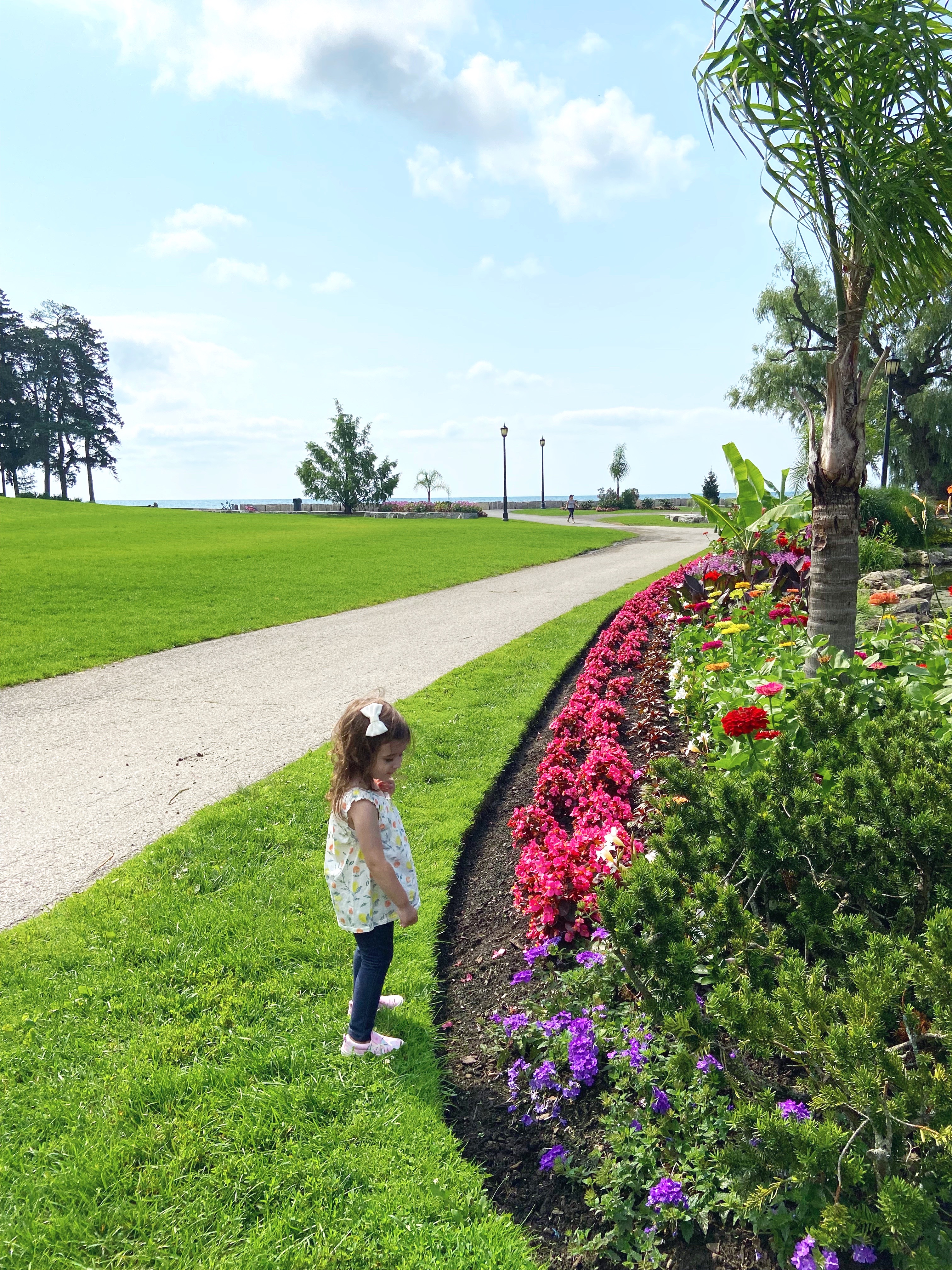
Gairloch Gardens is one of the most beautiful locations I’ve ever visited! Everything about it exuded a sense of peacefulness and beauty, while still feeling welcoming . The grounds are immaculately maintained and it really encourages you to slow down, stop, and literally smell the roses. Not only are the gardens a must-see, but the close proximity to the lake is breathtaking! The sound of the waves crashing while looking out at the gardens, fountains, and grounds, made for one of my very favourite outings this summer!
Note:
Below I’ll address different elements that I take into consideration when planning in the hopes of clarifying any accessibility or suitability questions you may have as you plan your visit! These are all based on our personal experience (our oldest son is autistic and non-verbal, and we are a family of 5 with a 7-year-old, 6-year-old, and 2-year-old). I would suggest doing a quick search to ensure availability before heading out to avoid any disappointment (especially with changing health protocols, potential grounds upkeep, events, etc).Address
Gairloch Gardens is located approximately at:
1306 Lakeshore Rd E
Oakville, Ontario
L6J 1L6
Click here for a helpful map!
Parking
There was a free parking lot onsite, with a path that led directly to the gardens. We visited first thing in the morning on a weekday and upon arriving, there were plenty of spots available! By the time we left a couple of hours later, the lot was full. So, that’s definitely something to take into consideration. Other than that lot, I didn’t see anywhere else nearby to park.
Terrain/Accessibility
For the most part, everything was paved and very, very clean and neat. There were a few areas that had steps, but were also accessible by walking alternate paths nearby. The gardens had a gravel terrain, that was very even and well-maintained. The path around, with views of the lake, was paved and fairly wide.Quiet Spots
The whole location was very serene and quiet. Closer to the shore, the sounds of the waves and birds were louder, but otherwise, it was a very calm environment.
Size of Location/Busyness
There was plenty of space to explore and discover. We visited early on a weekday morning and it was very quiet, with only a few other people/ families walking around and taking photos. There are a variety of paths and areas to explore (see the next section!).
Variety of Activities
The gardens are absolutely stunning and different sections are scattered throughout the grounds. There’s a pond with a little bridge that is very picturesque, as well as a little pond filled with turtles, tadpoles, and frogs that captured E’s attention for a little while! The enclosed gardens are absolutely stunning, with a fountain in the center and different varieties of flowers planted and blooming in sections as you walk along the winding paths. Benches are situated within this area as well and it’s a beautiful spot to sit and take everything in. If you walk further south, there’s a paved area, with high rocks where you can sit and look out at the lake! The water itself is not accessible, but it’s an incredible spot regardless. If you continue walking on the paved path, there’s a little gazebo area and an enclosed little patch of green space, perfect for a picnic or to let the kids safely run around! I wouldn’t say that you’d need more than an hour, to see everything and maybe have a little picnic, but it is most definitely worth the drive! There was an art gallery, Oakville Galleries onsite, but it was closed when we visited. After checking their website, it seems that they are closed until further notice, but it does state that admission is free and it’s definitely something to consider adding on to your visit, once they re-open!Cost
There was no cost to visit!
For History of Gairlcoch Gardens and More Information Check Out:
Gairloch Gardens
Other helpful links in this series:
Summer Adventures & Accessibility!
What We Consider When Planning An Outing
Guild Park and Gardens
Glen Stewart Ravine
Crawford Lake Conservation Area
Sawmill Creek Valley Trail





-

Sawmill Valley Trail
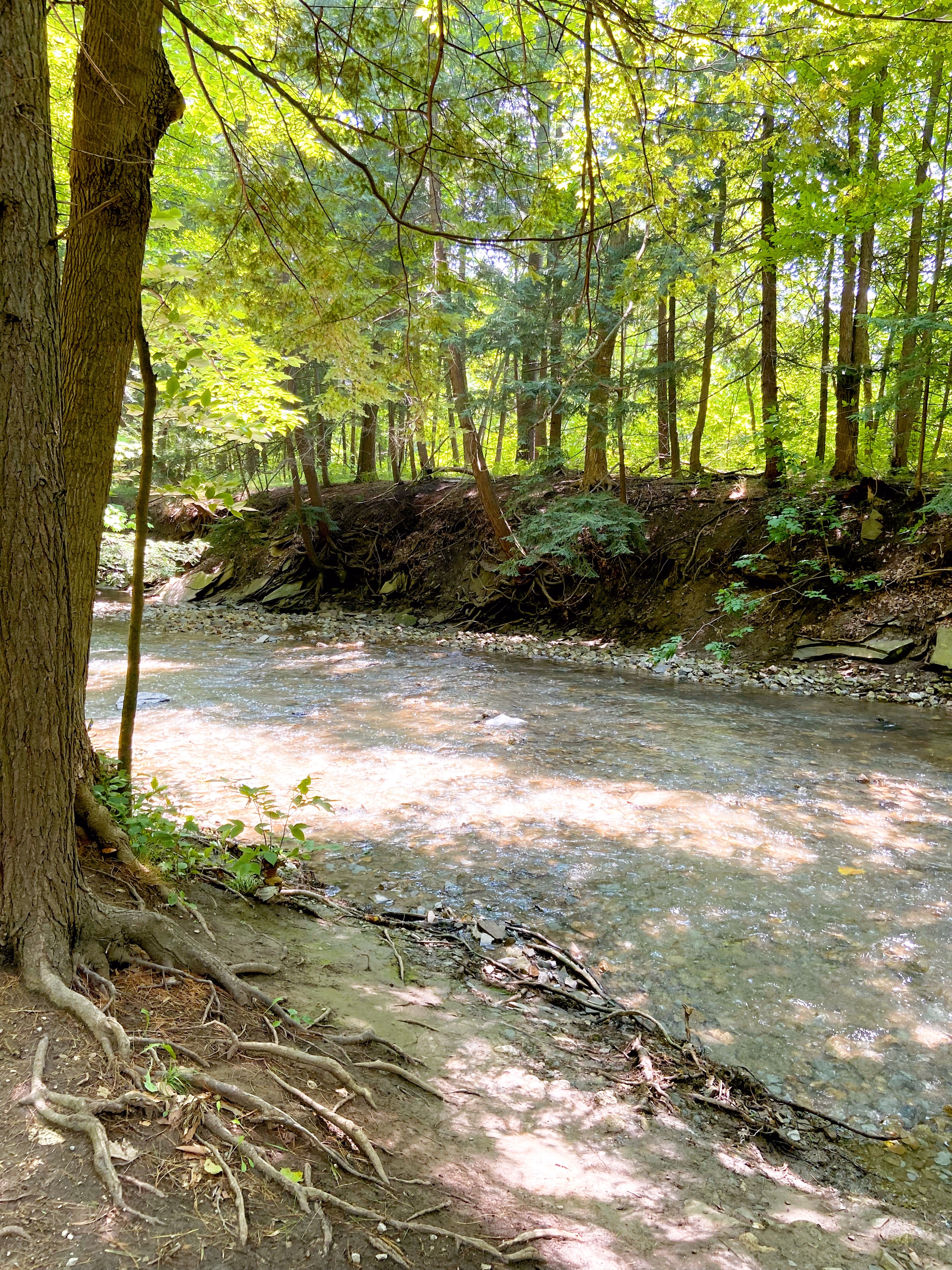
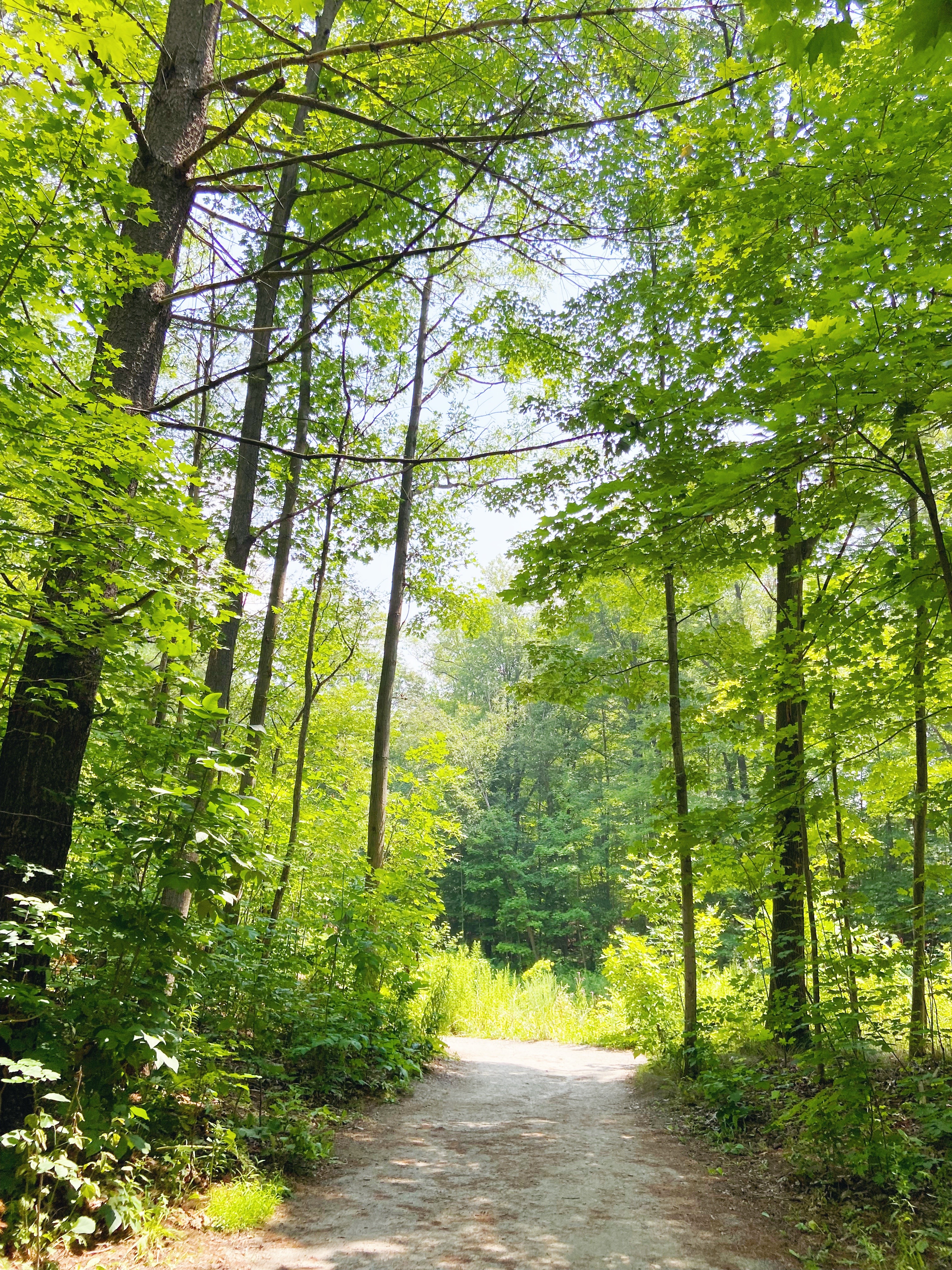
Sawmill Valley Trail provided our family with such a wonderful way to spend a Sunday afternoon! The trail was fairly easy, with no exposed roots or especially difficult terrain, which meant that all three kids, at their different levels and abilities, could navigate it independently and safely. As I mention below, we did remain cautious and vigilant of the creek, but for the most part, it was isolated from the trail by either railings or brush. It was a very peaceful walk, with the sounds of the rushing water as the soundtrack, and offered plenty of absolutely stunning views. It was almost entirely shaded, which helped it feel cool and not stifling on a fairly hot summer afternoon. The trail was also very clearly laid out, and whereas sometimes Y will attempt to detour or go off into the brush, this time it was easier to stay on course. Definitely one of the most family-friendly and enjoyable trails we’ve visited!
Note:
Below I’ll address different elements that I take into consideration when planning in the hopes of clarifying any accessibility or suitability questions you may have as you plan your visit! These are all based on our personal experience (our oldest son is autistic and non-verbal, and we are a family of 5 with a 7-year-old, 6-year-old, and 2-year-old). I would suggest doing a quick search to ensure availability before heading out to avoid any disappointment (especially with changing health protocols, potential grounds upkeep, events, etc).Address
There are a variety of entrances to the trail and addresses to accompany each. The main address we used to get close to our destination was
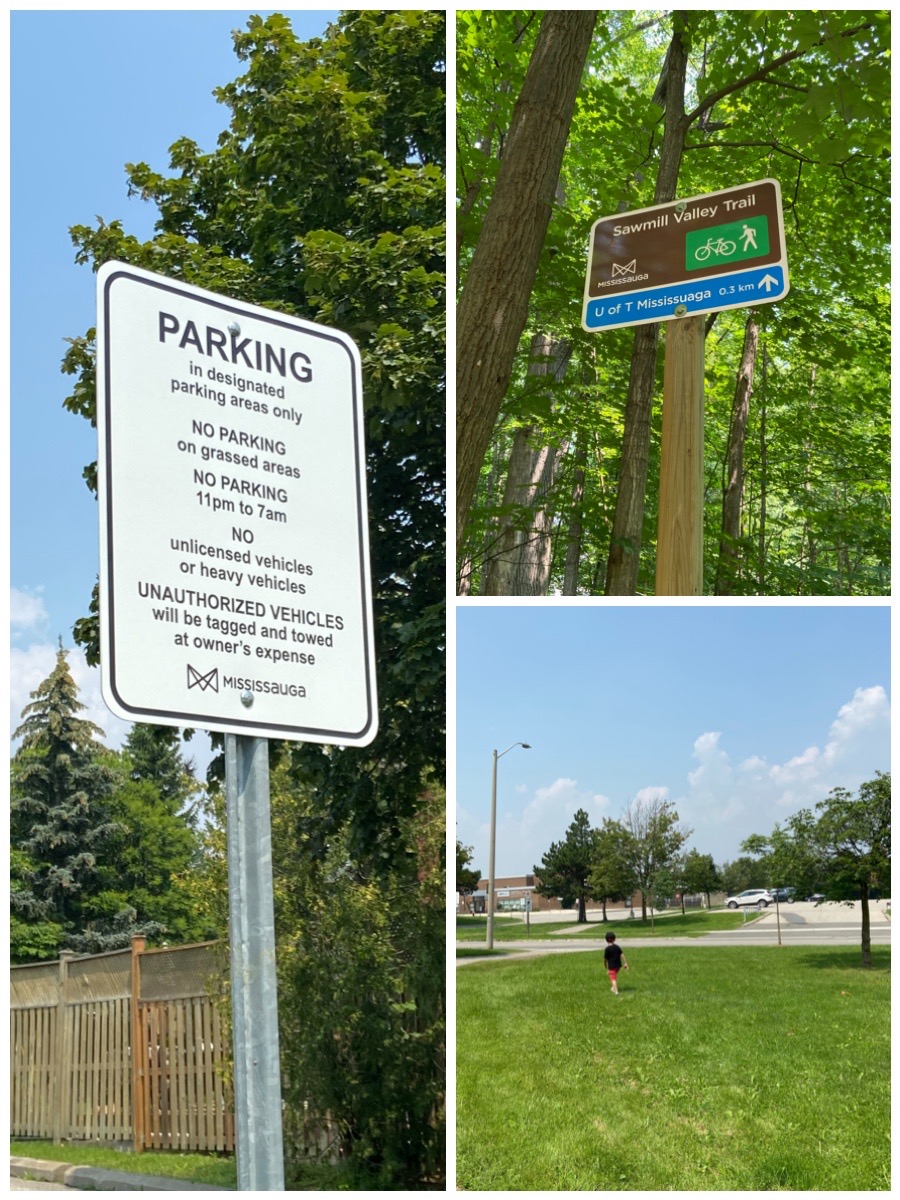
1955 Burnhamthorpe Rd W, Mississauga, ON L5L 3A5. There was also an entrance about 0.3 km from U of T Mississauga, so you may be able to input that as an alternate address to locate the trail. See below for the parking address we used that was super convenient!
Parking
We found a parking lot with free parking directly across the street from an entrance to the trail. Following the trail from here allowed us great views of the creek as well as the ability to explore a variety of different terrain. The parking lot was located immediately next door to Sawmill Valley Public School at:
3675 Sawmill Valley Dr
Mississauga, ON
L5L 2Z5
I’ve included a photo in the gallery below with parking information.
Terrain/Accessibility
We found the terrain very manageable. The kids were all able to walk independently and while we remained cautious and vigilant of the creek alongside the trail, it was a very pleasant and easy hike. The terrain did change a few times from paved, to light, even gravel, to a fabricated boardwalk, to a wooden one. The paths were very wide, with ample room to pass anyone walking by and at no point did we feel too confined. The boardwalk had a rail on one side and not the other and Y attempted to step off of it a couple of times, so that is something to note or be aware of. Unlike Glen Stewart Ravine or Crawford Lake, it isn’t enclosed on both sides (links to both trails can be found below). Photos of the different paths and terrain are included in the gallery below.Quiet Spots
Overall, the trail was very quiet. There was a small stretch where you could hear the sounds of traffic from nearby roads, apart from that, the sound of the creek was the main thing heard! There was a formation of rocks that the kids sat on near the creek to take a break about midway through, other than that there weren’t many places to sit and rest.
Size of Location/Busyness
We visited on a Sunday afternoon in July and it was not busy at all! We occasionally passed other families or people walking dogs, otherwise, it was very quiet!Variety of Activities
As I mentioned above in the Terrain/ Accessibility portion, there are a variety of terrains to explore, as well as different areas where you can stop and look at the creek fairly closely. There was an underpass with a few different murals that was a fun photo spot as well! We passed families who were walking dogs or biking, both of which are great options as well, if applicable for your family.Cost
There was no cost to visit!
Other helpful links in this series:
Summer Adventures & Accessibility!
What We Consider When Planning An Outing
Guild Park and Gardens
Glen Stewart Ravine
Crawford Lake Conservation Area




-

Recently Read! (July 2021)
Here are my most recently read books from July 2021!
Have you read any of these? I’d love to hear what you thought!
Early Morning Riser (Katherine Heiny)
I will be honest and admit that I had a hard time getting through this one. I was so looking forward to it, but I just felt like there wasn’t much substance to it overall. Jane falls in love with Duncan who seems to have had the same effect on pretty much every woman in the city (and neighboring cities as well). When a tragedy occurs in the town, their lives become further intertwined and together they assume the responsibility for their friend and neighbor Jimmy, whose diagnosis is never fully revealed. The novel spans years of their lives and ultimately their relationship does seem to become more natural and less a result of circumstance. Love, marriage, parenthood, community and allowing our past to shape our future, are all explored and delved into.The Paris Library (Janet Skeslein Charles)
This was a great read! I loved how the main character, Odile, doesn’t let anyone stand in the way of her ambitions and goes out and lands her dream job. Although this novel takes place during the war, I felt like it was very lightly touched upon, with heavier moments scattered about. It’s a great historical fiction read for someone who is looking for something a little less intense and graphic. Odile and her fellow Librarians join the resistance in a way that seems simple, but whose dedication to patrons, regardless of religion or background, is powerful all the same. The story also centers around Odile’s life in Montana almost 4 decades after the end of the war. The relationship she develops with her neighbour, Lily, is fraught with miscommunications which lead to misunderstandings, with a good measure of the typical teenage angst thrown in as well, and helps to uncover and clarify events from the past, in a seamless and moving way.Second First Impressions (Sally Thorne)
This was a very light, easy read! Ruthie is one of the most innocent and almost childlike protagonists I’ve come across in a long time. She works as admin in a retirement complex and takes her role very seriously. She is shadowed by her past and the ways in which she disappointed her parents, and now seeks to be as perfect and pulled together as possible. She can’t see that she’s actually the one that was wronged. Her guilt, and the way in which it impacts her to the present day is, at times, hard to read. The cast of characters is strong, with Teddy Prescott (son of the property owner), Melanie, an eccentric office temp who seeks to set up Ruthie in a relationship using a method she’s devised and trying to trademark, and the Parloni sisters, who bring it all together with their antics and love (beneath layers of sarcasm and meddling!). All in all, it’s a charming read!That Summer (Jennifer Weiner)
This was a much heavier storyline than I was expecting. I read Big Summer last year and felt the same way, as the impression I got was initially an easy summer read and ultimately ended up requiring a lot more concentration and emotional investment in both the plot and characters. Jennifer’s writing is straightforward and she doesn’t sugarcoat difficult topics, which at times makes it difficult to read. The story centers around two women who live within very different circumstances, but have a lingering dark past tying them together. Daisy is married, a mother to a teenage daughter, and has a thriving cooking business. There is an undercurrent of discontent within her life and the guilt for feeling such, when she realizes she is blessed with so much. On the other hand, Diana had such a promising future ahead of her until one traumatic evening that sets the rest of her life off course. The way she addresses her trauma, as well as the way in which she continues on with her life, is remarkable. There are a couple of graphic scenes that may leave readers uncomfortable, to put it mildly, but I believe they’re necessary to establish the power of Diana’s story – of both being broken and trying to recover. The way these women come together and the repercussions of having done so make for a powerful read!
The Home Edit (Clea Shearer & Joanna Teplin)
A few months ago, I read The Home Edit Life (you can find my review here) and loved it! I’ve been following THE on Instagram for a while now, but I’ll admit that it wasn’t until their Netflix series that I really became a full-fledged fan! After a couple of episodes, I had reorganized a few drawers, and then moved on to our pantry, and haven’t stopped since! Their personalities and humour shine through each page and you can almost hear their voices while reading little anecdotes or hilarious observations! The encouragement they provide is always done so in a way that is not stressful, with humour and sincerity overpowering any pressure! The photos throughout the book were stunning and, while not something that I completely expected to replicate in our own home, they were a great starting place. The foundational concepts are able to be translated into any space! I personally found this one a lot more approachable, informative, and attainable than the second book and really enjoyed reading it!
The Diplomat’s Wife (Pam Jenoff)
This was definitely my favourite read of the month! I was not expecting the twists and turns throughout the plot, and not only were they done so seamlessly and well, the unanticipated nature of each one made them all the more powerful! The story revolves around Marta Nederman who has barely survived the war and is in a sort of rehabilitation hospital setting after being rescued by an American soldier, Paul. She comes across Paul again when recovering and the relationship they form carries throughout the rest of the story. Marta’s strength through everything she endures – from the very war itself as a member of the Polish resistance, to marriage, motherhood, trauma, love and loss, is told beautifully and paints the picture of a strong, heroic woman. There is so much I want to say about this book, but I don’t want to give anything away, even in the littlest bit, so I’ll just end this by saying this is a must read! -

Crawford Lake Conservation Area
We’ve visited a lot of different trails as a family, but I can honestly tell you this was one of my very favorites! The grounds were immaculately kept, there was ample space to explore and run around, the scenery was breathtaking, and there was a boardwalk that was long enough that it was worth the travel time/visit, but not so long that the kids couldn’t manage it! Given how far the drive is, I would definitely plan to take plenty of snacks or, if possible for your family, a full picnic, albeit keeping in mind the time limit in your booking (explained below). It’s a really worthwhile outing and there’s so much to learn and take in from your visit!
Note:
Below I’ll address different elements that I take into consideration when planning in the hopes of clarifying any accessibility or suitability questions you may have as you plan your visit! These are all based on our personal experience (our oldest son is autistic and non-verbal, and we are a family of 5 with a 7-year-old, 6-year-old and 2-year-old). I would suggest doing a quick search to ensure availability before heading out to avoid any disappointment (especially with changing health protocols, potential grounds upkeep, events, etc).
Address
3115 Conservation Road
Milton, ON, L9T 2X3
Parking
Once you’ve shown your reservation and entered the gates, there are a few different parking lots on site with ample parking. We were able to park right near the visitor centre, which was very close to the beginning of the Woodland and Side Bruce Trails, as well as the Crawford Lake Trail we ultimately ended up doing! There’s a very helpful map that you can download from the website, otherwise there are markings and signs posted throughout.
Terrain/Accessibility
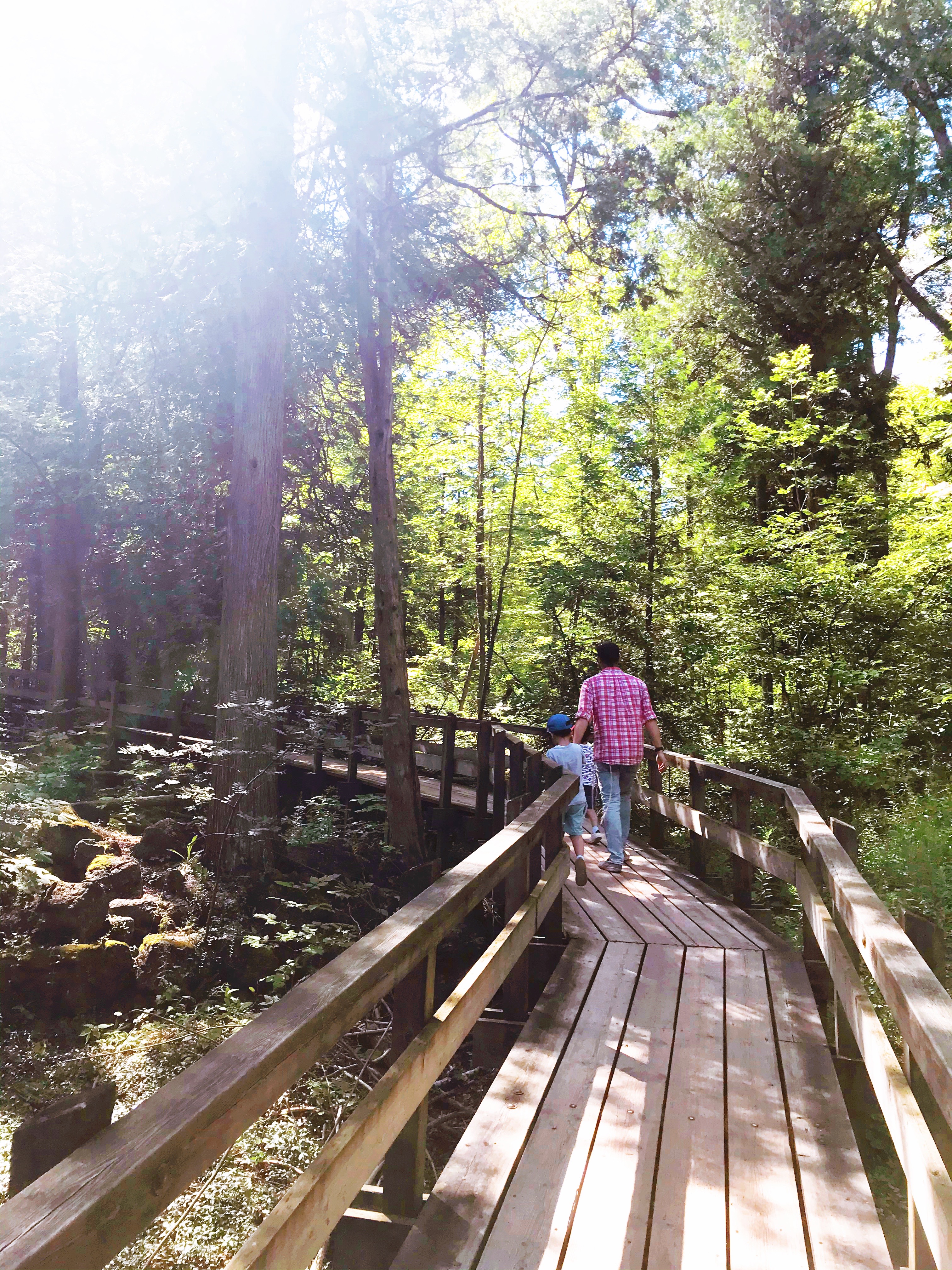
We were able to complete the boardwalk trail that goes around Crawford Lake with E in a stroller and both boys walking. It was completely manageable with the stroller (summer 2020) and smooth enough that the boys were able to safely walk it! N did get a splinter when he touched the rail, so that’s something to be cautious of with kids especially, but otherwise, we found it perfectly family-friendly! There are photos in the gallery below which will give you an idea as to the width and construction of the boardwalk itself, if you need any clarification. I liked that it was enclosed and that the boys could walk ahead independently without the fear of them detouring!
Having said that, we did attempt an alternate trail before finding the boardwalk and a family very kindly stopped us and suggested we go no further with the stroller, especially since the terrain was much more difficult to navigate (large rocks, exposed roots, more muddy than gravel, etc). If you’re looking for a more intense experience through the forest area, that’s definitely an option, but if smoother terrain is needed or you have very young kids, I’d suggest sticking to the boardwalk that surrounds the lake.
Quiet Spots
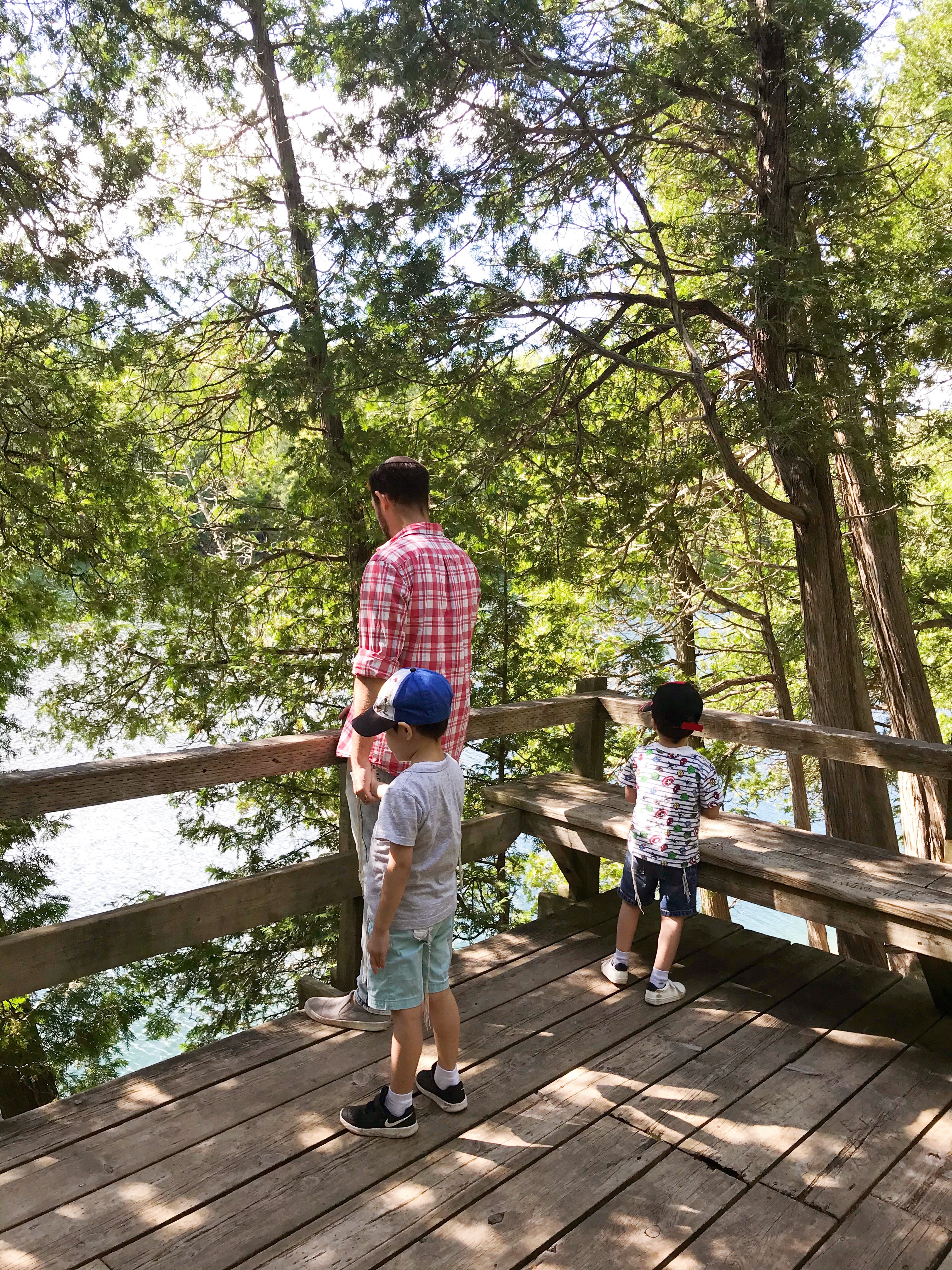
There were little areas just off of the boardwalk, complete with benches and an area to rest/ have some water and snack, etc., that we came across every now and then (I share an example in the gallery below). This was great to re-group, get an alternate view of the lake and pull out snacks or sunscreen, without causing traffic on the boardwalk itself! It was also fairly enclosed, so if M or I sat at the little entrance, the kids could walk around the little deck area with no issue.Size of Location/ Busyness
The reservation site (located in the cost section below) has a status bar that provides information regarding how busy the park currently is. Having said that, it is very large, with many offshoots and plenty of space to explore. Even when we visited in the middle of a summer day, there was still plenty of space and we didn’t feel overwhelmed or crowded at any point!
Variety of Activities
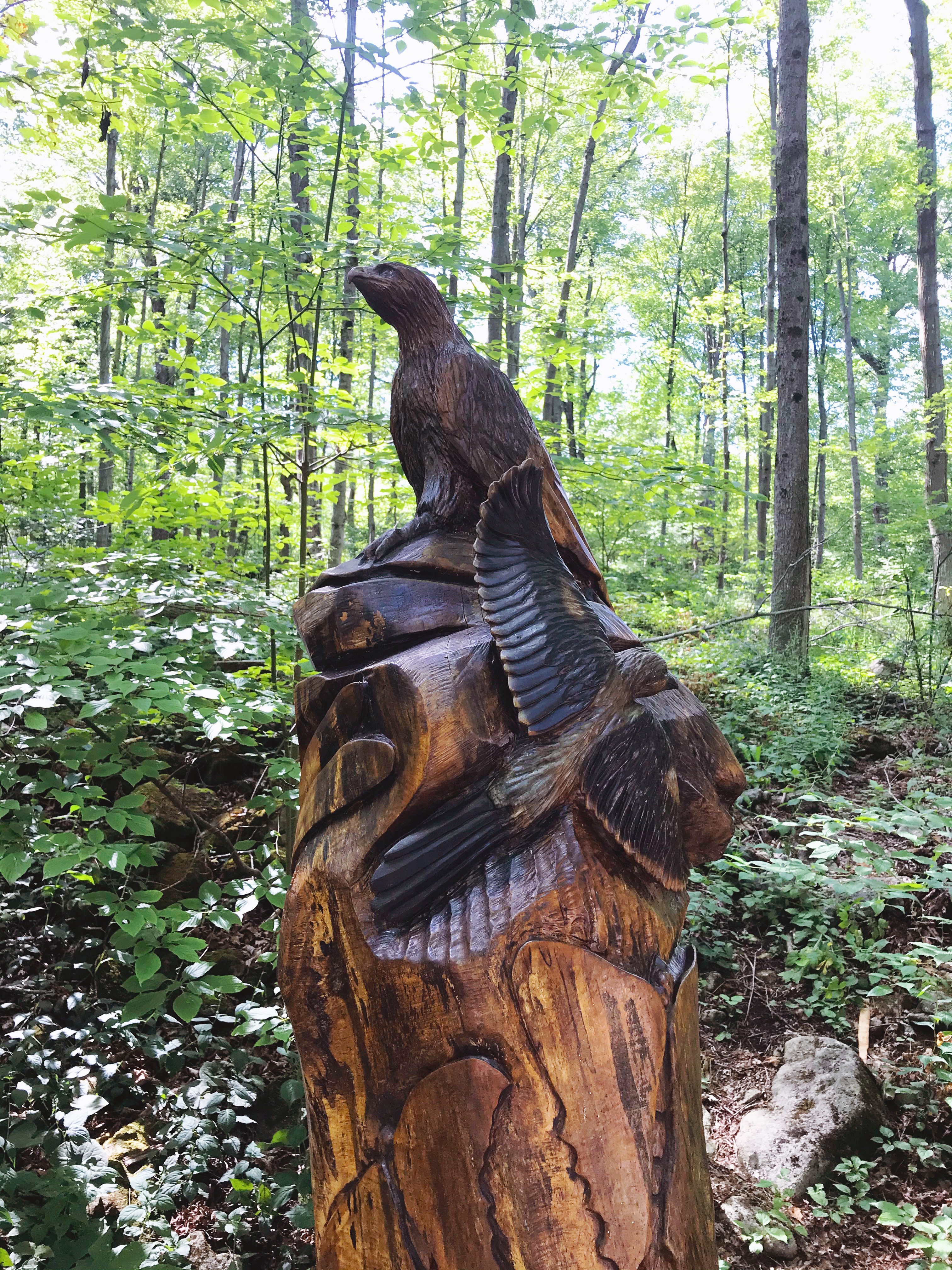
There is so much to do here! We mainly stuck to the boardwalk, but there’s also the Hide and Seek Trail where you’ll find a variety of beautiful, large wood carvings that seamlessly blend into the surroundings, and where you can learn about species at risk in Ontario. At the Longhouse Village you can visit, “seasonal exhibits that explore contemporary Indigenous art and culture” which is both fascinating and an important and meaningful experience.
Cost
Reservations must be made in order to visit and there are time limits to your visit! You can reserve by clicking the link here!
The website clearly states that, “Support persons for people with disabilities are free of charge.” We really appreciated this and it helped keep the cost of the outing down for our family.
Otherwise, the fees are as follow:
Adult (15-64) $9.50 +HST
Senior (65 & over )$7.50 +HST
Child (5-14) $6.50 +HST
Child (4 & under) Free
For more information, check out:
Crawford Lake Conservation Area
Other helpful links in this series:
Summer Adventures & Accessibility!
What We Consider When Planning An Outing
Guild Park and Gardens
Glen Stewart Ravine


 victoriarosenberg.com